
Niamh & Tony on their wedding day at Segrave Barns.
Planning a wedding in Northern Ireland involves a long list of decisions, and choosing a wedding photographer is one of the bigger ones. Your photographer will be present for most of the day and responsible for recording it clearly and honestly, so it’s worth taking time to get it right.
This guide is written for couples at the planning stage who are starting to look for a Northern Ireland wedding photographer and want to understand what to look for before booking.
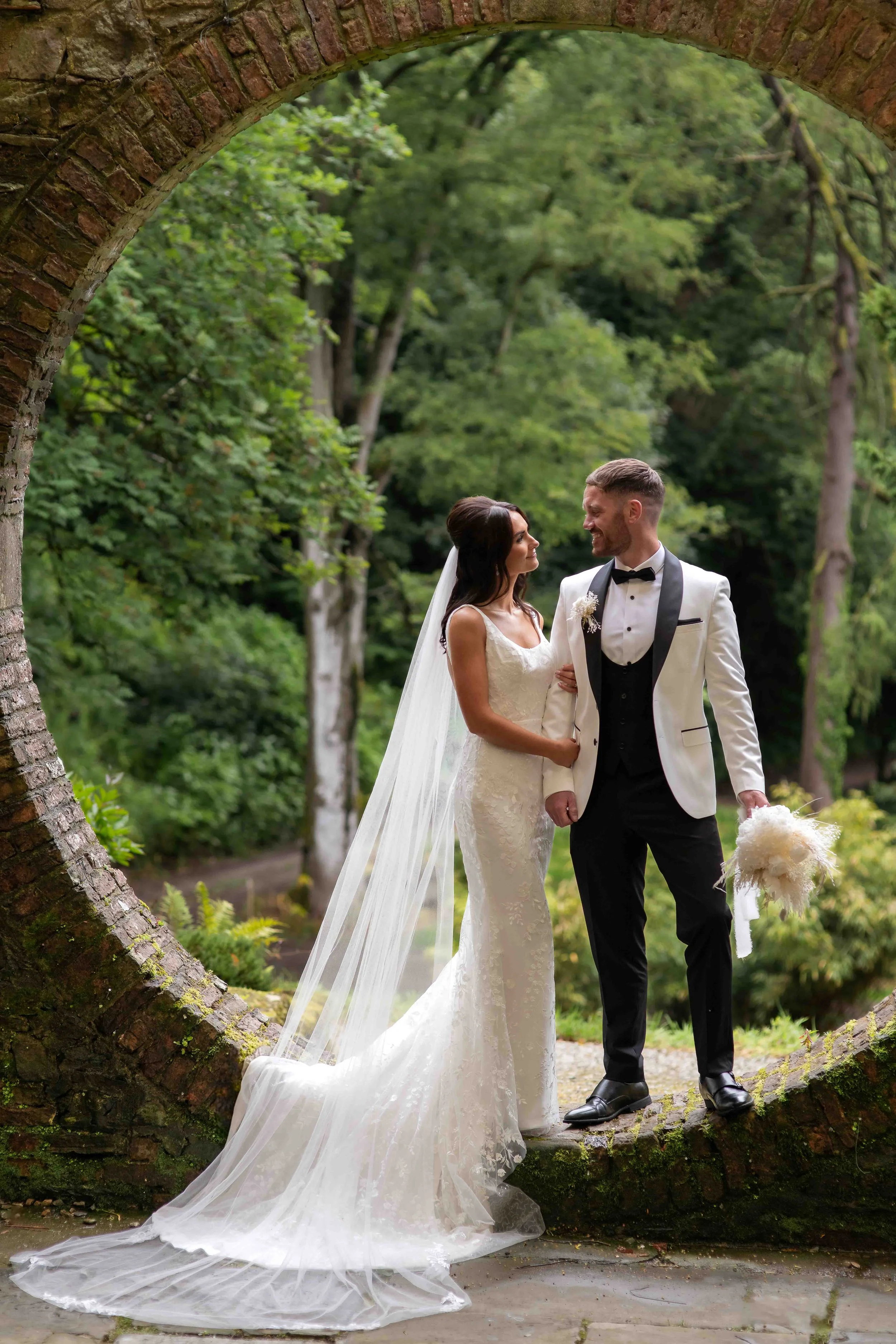
Relaxed wedding photography at Drenagh Estate, Limavady.
When to book your wedding photographer
Most couples in Northern Ireland book their wedding photographer soon after securing their venue. Popular dates and venues often book up a year or more in advance, particularly for summer weddings and city venues.
If you already have your ceremony and reception confirmed, it’s a good idea to start contacting photographers early. Even if your plans aren’t fully finalised, checking availability can help you narrow down realistic options.
What style of wedding photography suits you
Wedding photography styles can vary more than couples expect. Some photographers focus heavily on posed portraits, while others take a more documentary approach, recording events as they happen.
When looking through full wedding galleries, ask yourself:
Do the photos show full moments or just highlights?
Can you see real weddings from start to finish?
Do the group photos look organised and clear?
A good Northern Ireland wedding photographer should be comfortable working across different venues, lighting conditions, and weather, and should be able to show full galleries rather than just curated favourites.

Poh Chen & Daniel having their wedding photos taken outside the famous Cathedral quarter photo spot; The Duke of York, Belfast.
Understanding wedding photography coverage
Wedding photography packages usually vary based on hours of coverage. Some couples only need coverage for their ceremony and portraits, while others want full-day coverage from morning preparations through to the evening reception.
When comparing photographers, check:
What time coverage starts and ends
Whether group photos are included
How evening coverage works
What is delivered after the wedding (online gallery, downloads, albums)
Clear information at this stage avoids confusion later.
Local experience matters
Northern Ireland weddings often involve multiple locations in one day, such as a home, ceremony venue, city photo stops, and a separate reception venue. A photographer who knows the area can help plan timings realistically and suggest suitable photo locations nearby.
This is especially useful for city weddings in places like Belfast, where travel time, parking, and photo permissions can affect the schedule.

Champagne tower and sparklers at Limepark, a wedding venue in Northern Ireland.
What to ask before booking
Before booking your wedding photographer, it’s worth asking a few practical questions:
How many weddings do you photograph each year?
Have you worked at our venue before?
How long does it take to receive the full gallery?
Is there a contract and booking fee?
A professional photographer will be happy to answer these clearly and provide everything in writing.
Planning your wedding photography timeline
Your photography timeline doesn’t need to be rigid, but it should allow enough time for key parts of the day. Group photos, couple portraits, and travel between locations all take longer than couples often expect.
Your photographer should be able to advise on:
How long group photos usually take
When to schedule couple portraits
How to allow time without rushing the day
Good planning here helps everything else run more smoothly.
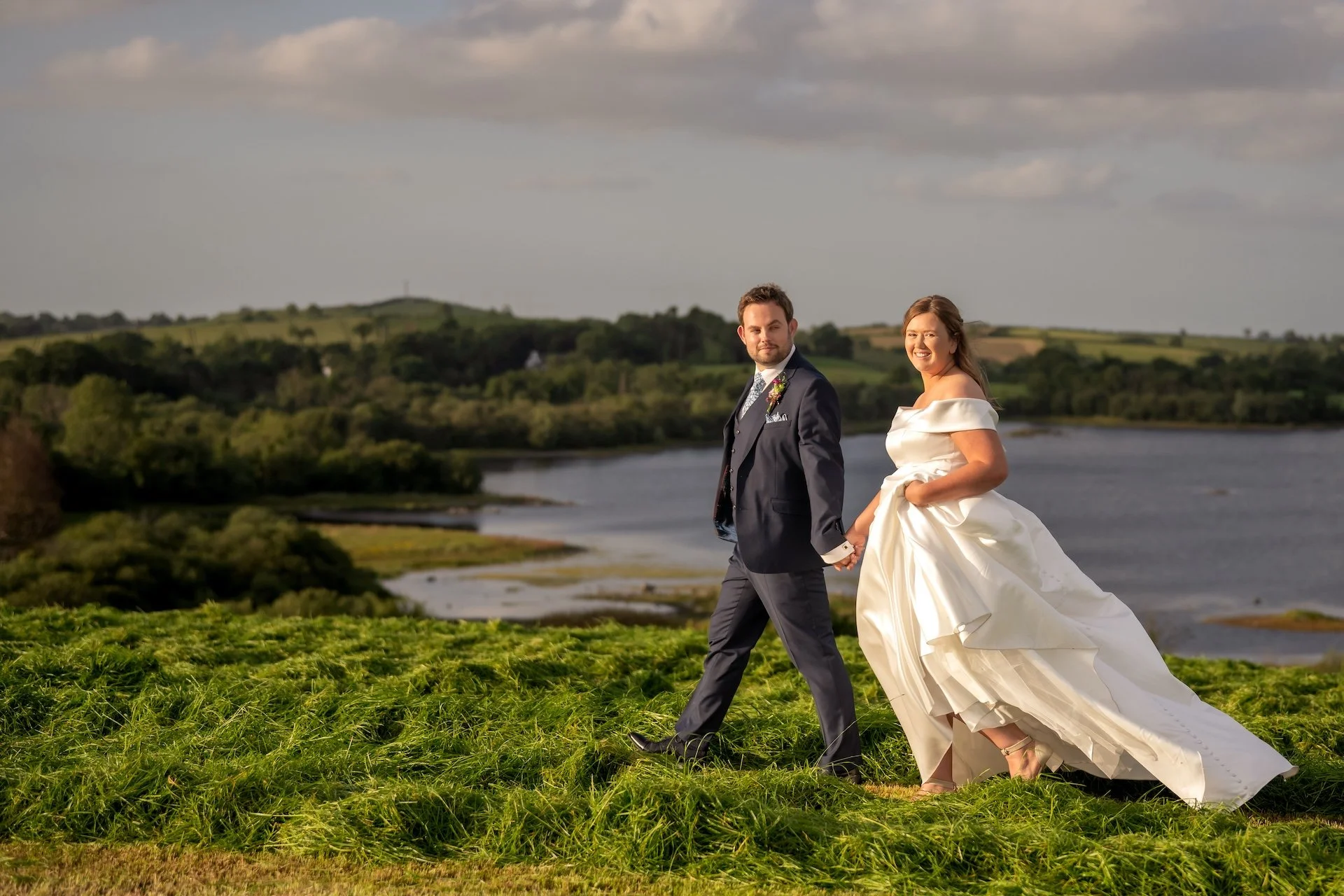
Kirsty & Mark walking beside the lake during golden hour at Tullyveery House, Killyleagh.
Final thoughts
Choosing a wedding photographer in Northern Ireland isn’t about finding the loudest or most heavily marketed option. It’s about finding someone whose work you trust, who communicates clearly, and who understands how weddings actually run.
Looking through full galleries, asking practical questions, and booking early will put you in a strong position as you continue planning the rest of your day.
If you’re still at the early stages, reading real wedding blogs from venues you’re considering can also help you understand how different days are structured and what coverage might suit you best.
If you’re currently planning your wedding and would like to check availability or ask a few questions, you can get in touch here.